When sitting under a gazebo, you may only see the intricate thatch roofing creating by artisans or the richness of the natural reed and sturdy wooden structure, without considering its history. You may not realize that gazebos have been around for literally centuries and have been favoured by diverse civilizations throughout history.
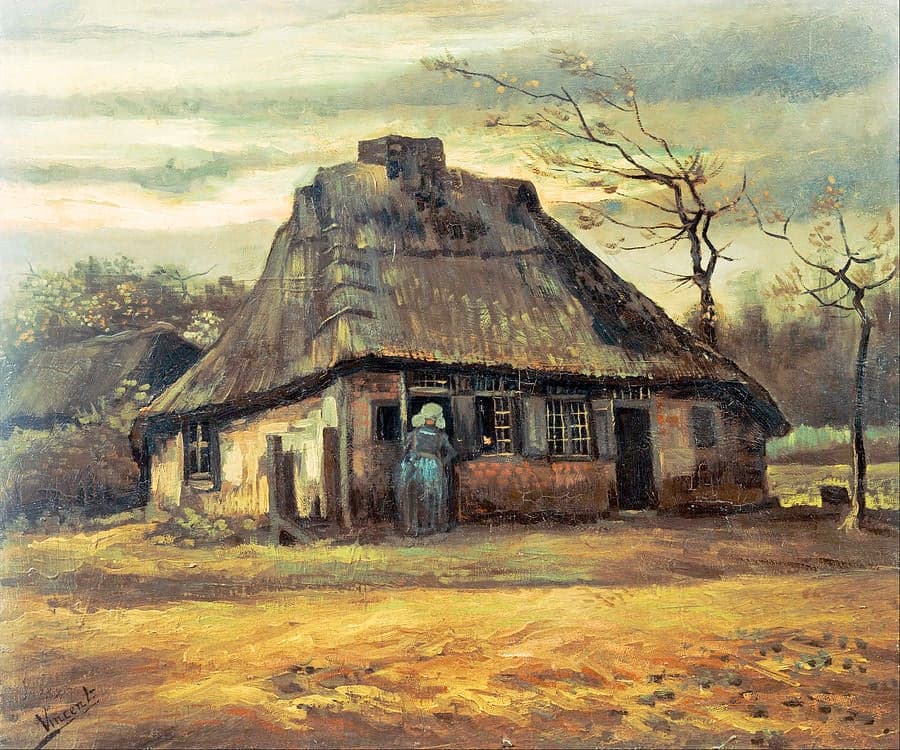
This train of thought was provoked by Cape Reed’s Managing Director, Andre van Heerden’s, trip to the Van Gogh Museum in Amsterdam. Whilst admiring the great painter’s work, in particular The Cottage, he was reminded that Vincent Van Gogh lived in a cottage with thatch roofing, which he called a ‘human nest’.
The painting evoked thoughts of simpler time, of safety, security and nature, and it became apparent that the desire to return to a more authentic way of life and to be at one with nature is something that inhabits the subconscious mind. The more successful we are, the more we crave nature and sustainable living. He was struck by the enduring desire to connect with nature and wondered in what ways it was satisfied throughout the ages. One visible way to achieve closeness to nature which dates back thousands of years is by creating decorative outdoor structures, like the humble (and often not so humble) gazebo.
The oldest know gazebos dates back to 1400 BC, when it was discovered in the plans for a garden of a high ranking official. Although, there is some debate amongst historians and archaeologists as to whether this type of structure could date back even further and were used as private temples.
Similarly, in ancient Greece and Rome, small gazebo type structures were built in marble to service as small temples. The structures were extremely popular and used as summerhouses and focal point in public spaces, which can be seen in ancient ruins in Rome and Pompeii.
In the Arabic world, these open sided structures were called ‘kiosks’, rather than gazebos. The Persian version dates back to the 10th Century and refers to a wide spectrum of designs ranging from fabric tents to marble structures.
Of course, we know that this type of structure is much-loved throughout Asia, one glance at an ornate garden pavilions and Japanese teahouses and it clear to see that many architects in the 18rth Century were heavily influenced by this Asian aesthetic, kick-starting the popularity of gazebos throughout Europe. Throughout the middle-ages, gazebos were popping up as decorative structures in France and Italy, and also in royal gardens in Elizabethan England.
By the 18th century the gazebo had also crossed the Atlantic to America, where they were adopted by the middle-classes. At one stage there was a preference for a wide front porch, which saw the decline in demand for gazebos stateside, but they soon became fashionable again as they could be positioned away from their homes, affording much-coveted privacy from their neighbours’ prying eyes.
Ok, so now we know the noble origins of this seemingly humble structure, but what is the definition and where did its name come from? Let’s start with the definition; a gazebo is a free-standing structure with a cupola roof and half height open walls.
The position and open walls are key parts of a gazebo’s character and also give the structure its name. The first mention (that we know of) in the English language of gazebo was in 1752, which is purported to be a combination of the English word ‘gaze’ and the Latin ‘ebo’, which together mean “I will see”, which refers to the views afforded from the structure. In today’s vernacular, we use many names to describe similar structures, ranging from pavilion to pergola, but essentially, they are all related to the original gazebo.
Fast forward to today and we are still enjoying our pergolas and the opportunities they provide for communing with nature whilst providing shelter, shade and decoration in any outdoor space. Cape Reed’s experienced team designs gazebos with thatch roofing for commercial and private residences and also creates other types of garden architecture according to clients’ particular specifications. They can be small, tall or large enough to host a party, covered in vines, climbing flowers, painted, whitewashed or simply showing the grain of the natural timber columns.
If you would like more information about Cape Reed’s gazebos with thatch roofing, summerhouses, wooden pavillions or any other types of wooden structure, contact Cape Reed SL on +34 951 77 54 95, email europe@capereed.com or visit the website https://www.backoffice.capereed.es.


About Cape Reed Team
Our expert team at Cape Reed Spain brings decades of experience in sustainable thatching and premium outdoor living solutions.
You Might Also Like
Discover more outdoor living inspiration
Why Fire Protection Is Essential in Spain — And How Cape Reed Fireshield Can Safeguard Your Property
Spain’s summers are known for their beauty — long sunny days, vibrant outdoor living, and thriving hospitality venues. B...
Wooden Pergola Applications in Spain & Portugal: Carports, Balconies & More
A wooden pergola is no longer a luxury extra in Spain or Portugal. Instead, it has become an essential architectural fea...
Engineered Laminated Timber vs Solid Timber
Choosing the right timber for outdoor structures can feel overwhelming. However, the decision becomes clearer when you c...