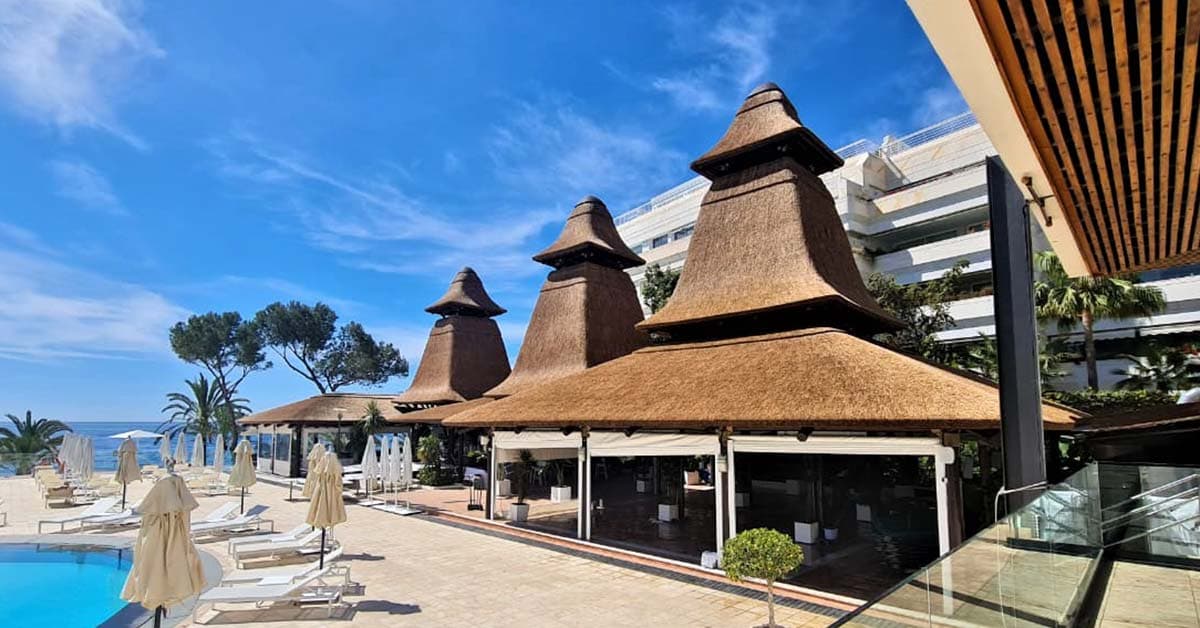
If you have ever visited a beachfront resort, a luxury villa, or a boutique hotel in southern Spain and admired the natural warmth of its rooftops, there is a good chance you were looking at thatched roofing. But not all thatched roofs are equal — and in Spain, the distinction matters.
For generations, Spanish builders and landscapers have used brezo, a locally harvested heather plant, to create rustic thatched roofs and pergola coverings. It is a traditional material with deep roots in Iberian architecture. However, as property owners, architects, and community administrators have discovered, brezo has real limitations — particularly when it comes to longevity, fire safety, and long-term performance in coastal climates.
At Cape Reed International, we work exclusively with Thamnochortus insignis, a premium reed harvested sustainably in South Africa. It is the material behind some of the most celebrated outdoor structures on the Costa del Sol, in Portugal, Belgium, and across the Arabian Gulf — and it performs at a fundamentally different level.
Here is what you need to know.
What Is Brezo?
Brezo is the Spanish term for common heather (Calluna vulgaris or Erica species), a flowering shrub that grows abundantly across the Iberian Peninsula. Traditionally, dried heather bundles were layered onto timber frames to create low-cost, naturalistic roof coverings for gazebos, bar terraces, garden structures, and poolside cabanas.
Its appeal is immediate and obvious. Brezo looks organic and rustic, blends beautifully into Mediterranean garden settings, and is inexpensive to source and install. For many years it was the default choice for outdoor roofing across the Costa del Sol and beyond.
However, brezo has a fundamental problem: it deteriorates quickly. In coastal environments — with salt air, intense UV exposure, and damp winters — brezo roofs typically begin to degrade within three to five years. The heather dries out, becomes brittle, loses its colour, and eventually breaks apart. Waterproofing performance drops sharply. And without specialist fire-retardant treatment, dried brezo presents a significant fire risk.
What Is Cape Reed Thatch?
Cape Reed thatch refers specifically to roofing made from Thamnochortus insignis, a restio reed native to the Western Cape region of South Africa. It is a grass-like plant that grows in the fynbos biome — one of the world’s most biodiverse plant ecosystems — and has been used in Southern African thatching for centuries.
What makes Thamnochortus insignis exceptional as a roofing material is its physical structure. Each reed stem is dense, hollow, and coated with a natural silica layer that gives it outstanding resistance to moisture, UV radiation, and biological decay. Unlike brezo, which is essentially a dried flowering shrub, Cape Reed is a true thatching grass engineered by nature for resilience.
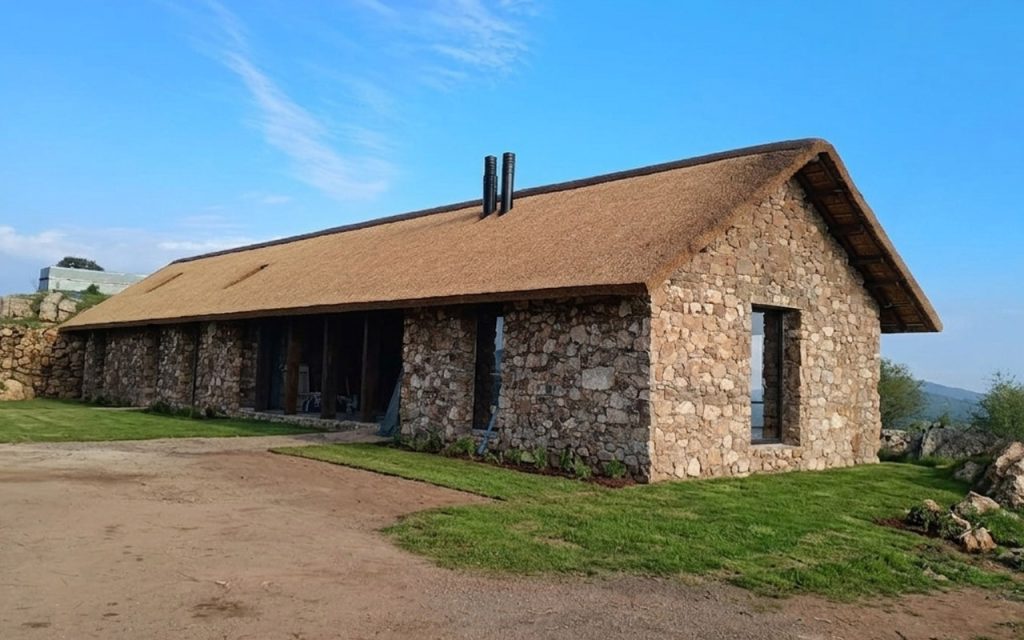
When harvested at the correct maturity and installed by experienced thatchers, a Cape Reed roof will typically last between 15 and 25 years — three to five times longer than brezo under equivalent conditions.
Five Key Differences Between Cape Reed and Brezo
1. Longevity
This is the most significant practical difference. A professionally installed Cape Reed thatched roof on a coastal property in southern Spain can be expected to perform well for 15 to 25 years before requiring refurbishment. Brezo, in the same environment, commonly needs replacing within 3 to 7 years.
For property owners, resort managers, and community administrators, this difference is transformative. The higher upfront investment in Cape Reed thatch is almost always recovered within the first replacement cycle — and usually well before.
2. Fire Safety
Dried heather is highly combustible. Without active fire-retardant treatment, a brezo roof presents a serious fire risk, particularly in Spain’s hot, dry summer months. Fire codes across Spain are increasingly strict about natural roofing materials on commercial and residential properties, and many insurance providers treat untreated brezo as a liability.
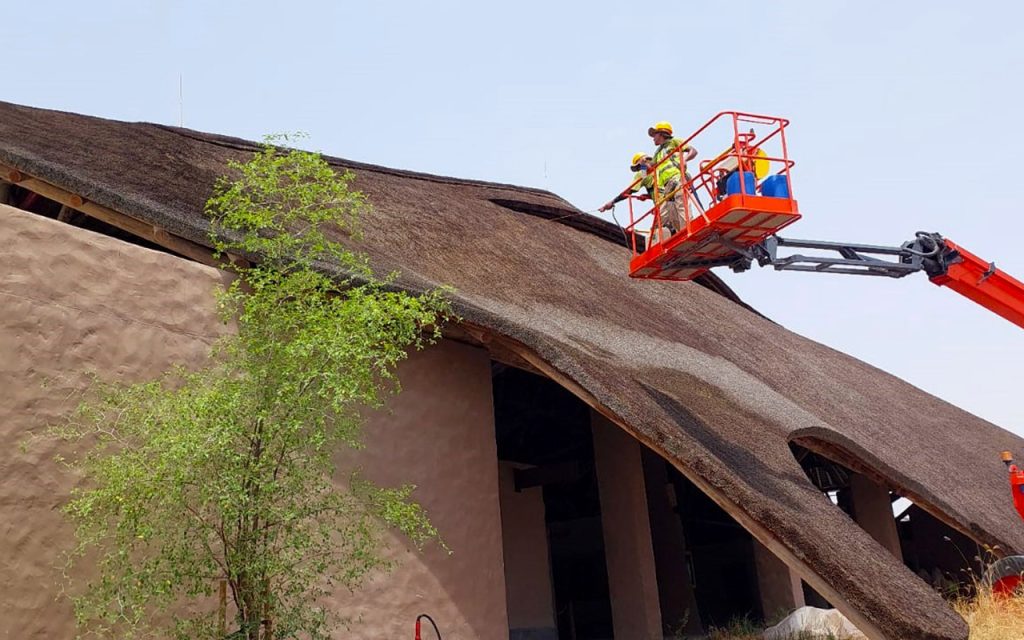
Cape Reed International addresses this through our proprietary Fireshield system — a multi-layer approach to fire protection that includes Cape Reed FireBloc fire-retardant underlay cloth and a topically applied Fireshield fire-retardant coating on the finished thatch surface. Together, these measures significantly reduce ignition risk and bring thatched structures into compliance with modern fire safety standards.
3. Waterproofing Performance
A properly laid Cape Reed roof, installed at the correct pitch with appropriate underlay and capping details, is a genuinely weatherproof roofing system. The density and silica coating of the reed stems create a natural layered barrier that sheds water efficiently, even in heavy rainfall.
Brezo, by contrast, is rarely installed to provide true waterproofing. It is more commonly used as a decorative covering over an existing structure rather than as a primary weatherproof membrane. As the material dries and contracts over time, gaps appear and water ingress becomes increasingly common.
4. Appearance and Finish
Both materials share a natural, organic visual character — but they look quite different in practice. Brezo has a looser, more rustic texture with visible heather stems and, in time, a faded grey-brown appearance. It is charming in an informal setting but can look tired and unkempt as it ages.
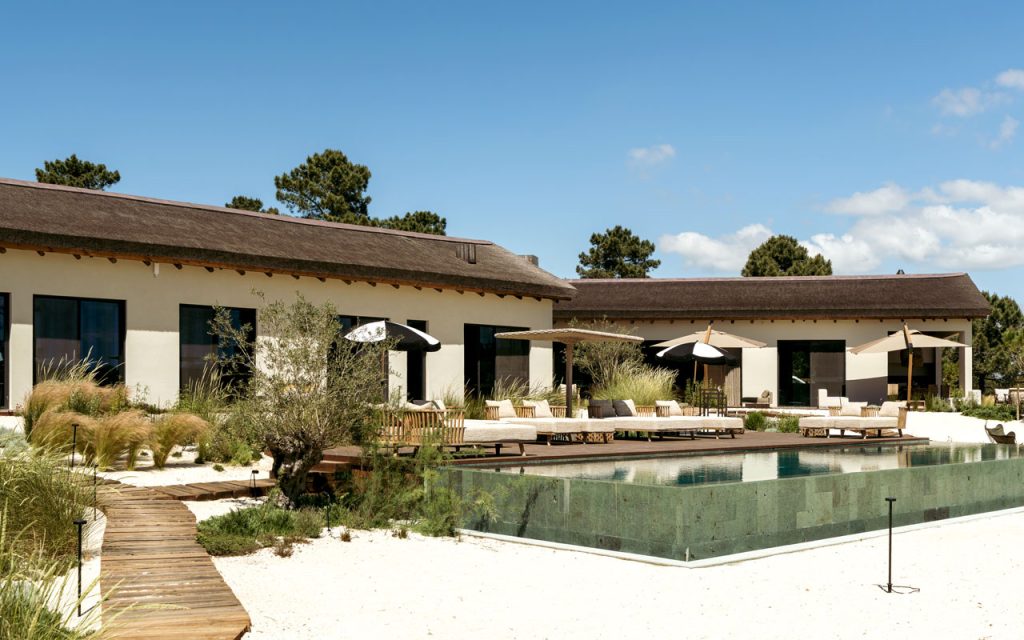
Cape Reed thatch, when freshly installed, has a dense, refined, honey-gold finish. The uniform bundle structure creates clean, precise lines that work equally well on a rustic beach bar and a high-end residential villa. Over time, the exposed surface weathers to a distinguished silver-grey, while the inner layers retain their structural integrity. Many of our clients consider this weathered finish to be part of the material’s character.
5. Sustainability Credentials
Thamnochortus insignis is harvested from responsibly managed fynbos farms in South Africa under strict environmental protocols. The plant is a natural fynbos species and its cultivation supports rather than disrupts the biome. Cape Reed thatch is biodegradable, contains no synthetic chemicals or plastic components, and at the end of its life can be composted or disposed of without environmental impact.
At Cape Reed International, sustainability is not a marketing claim — it is built into our material sourcing, our installation methods, and the longevity of every structure we build. A roof that lasts 20 years is, by definition, more sustainable than one replaced every five.
When Does Brezo Still Make Sense?
Brezo is not without a place. For very low-budget temporary structures, informal garden features, or decorative applications where appearance is the sole priority and longevity is not required, brezo remains a practical and cost-effective option. It also has genuine heritage value in certain traditional Andalusian and rural contexts.
However, for any application where durability, fire safety, waterproofing, or long-term performance matters — commercial hospitality venues, luxury residential properties, community facilities, or structures exposed to coastal climates — Cape Reed thatch is the professional choice.
The Alcazaba Beach Example
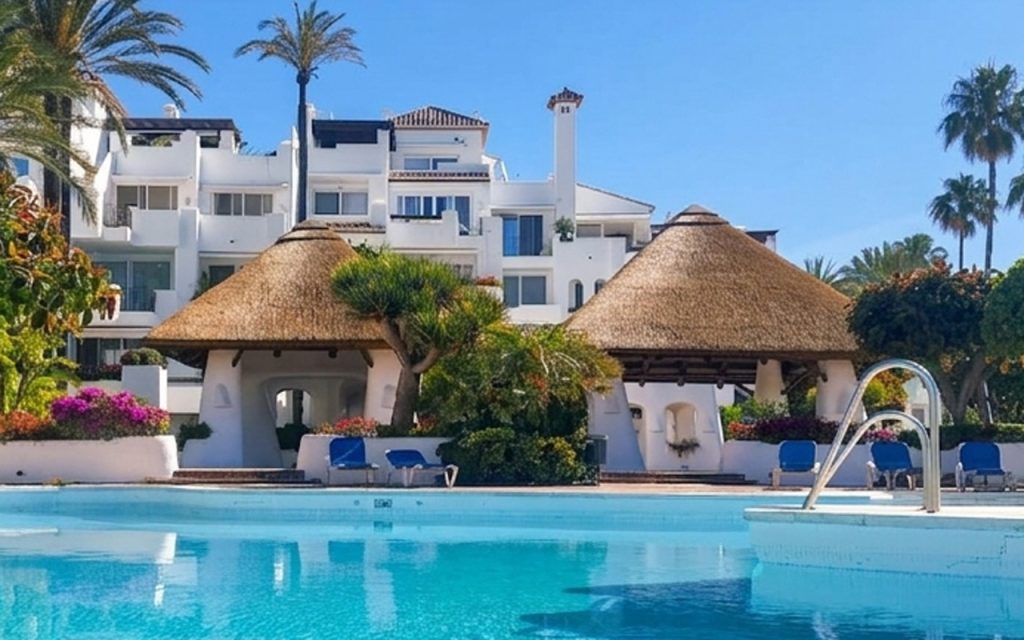
The value of upgrading from brezo to Cape Reed thatch is perhaps best illustrated by a project we completed at Alcazaba Beach in Estepona in early 2026. This prestigious beachfront residential community had original brezo roofs that, after years of coastal exposure, had deteriorated to the point where refurbishment was unavoidable.
Cape Reed International dismantled the existing brezo coverings, repaired and reinforced the timber roof structures, and installed 300m² of premium Cape Reed thatch — including FireBloc underlay and Fireshield fire-retardant coating throughout. The result was a set of roofs that preserved the warm, natural aesthetic the community had always valued, while delivering modern performance, fire safety compliance, and a lifespan that makes the investment genuinely worthwhile.
Conclusion
The choice between brezo and Cape Reed thatch ultimately comes down to what you are building for. If you want a natural-looking outdoor roof that will perform beautifully, last for decades, and meet modern fire safety standards, Thamnochortus insignis is in a different category from traditional Spanish heather — in durability, safety, and long-term value.
Cape Reed International has been installing premium thatch across Spain, Portugal, and Europe for over 20 years. If you are planning a new outdoor structure or considering a refurbishment of an existing thatched roof, we would be glad to advise.
Frequently Asked Questions
Can I replace my existing brezo roof with Cape Reed thatch?
Yes — this is one of the most common projects we undertake. We dismantle the existing brezo, assess and repair the underlying timber structure, and install a full Cape Reed thatched roofing system including fire protection. The result typically looks better, performs far better, and will last much longer.
Is Cape Reed thatch suitable for the Spanish climate?
Absolutely. Cape Reed thatch performs exceptionally well in Mediterranean climates. The material’s natural silica coating provides excellent UV resistance, and correctly installed roofs handle both the coastal humidity and winter rainfall of the Costa del Sol without issue. Cape Reed International has been working in southern Spain for over two decades.
Does Cape Reed thatch require planning permission in Spain?
This depends on the nature of the structure and your local municipality. Refurbishing an existing roof covering like-for-like generally does not require planning permission, but new structures may. We recommend consulting your local ayuntamiento or a qualified architect, and we are happy to provide documentation on our materials and installation methods to support any application.
How does Fireshield fire protection work?
Cape Reed Fireshield is a two-part fire-retardant system. FireBloc is a fire-retardant cloth installed beneath the thatch layer during construction. Fireshield is a topically applied coating applied to the finished thatch surface. Together, they significantly reduce the ignitability of the thatch and help structures meet current fire safety standards in Spain.

About Cape Reed Team
Our expert team at Cape Reed Spain brings decades of experience in sustainable thatching and premium outdoor living solutions.
You Might Also Like
Discover more outdoor living inspiration
From Concept to Completion: What to Expect When Specifying a Commercial Thatched Roof
For architects and developers who haven’t specified thatch before, the biggest hesitation usually isn’t the ...
Thatch vs. Other Commercial Roofing Materials: The Complete Comparison Guide
When you’re specifying a roof for a hotel terrace, beach club or restaurant, the decision usually comes down to a ...
Fireshield Explained: How Thatched Roofs Meet Spain’s Fire Regulations
Of all the questions we receive from architects, property developers, and homeowners considering thatched roofing in Spa...